
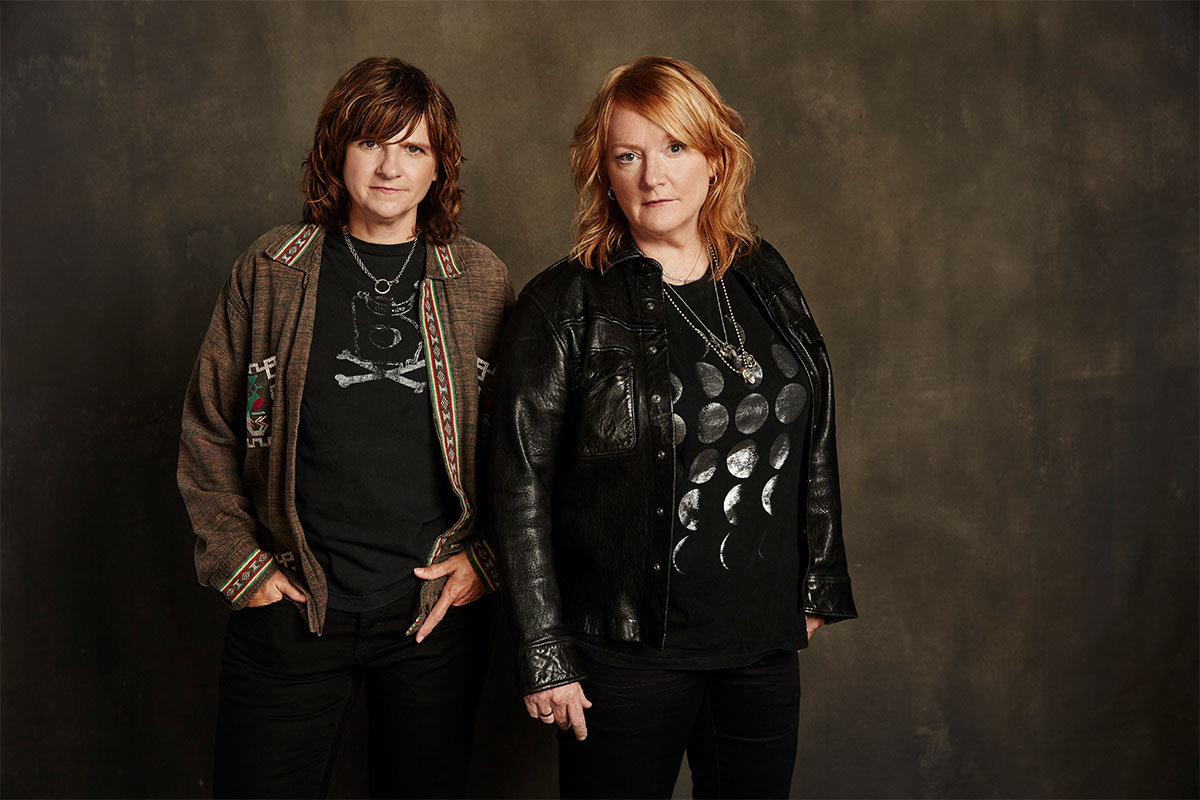
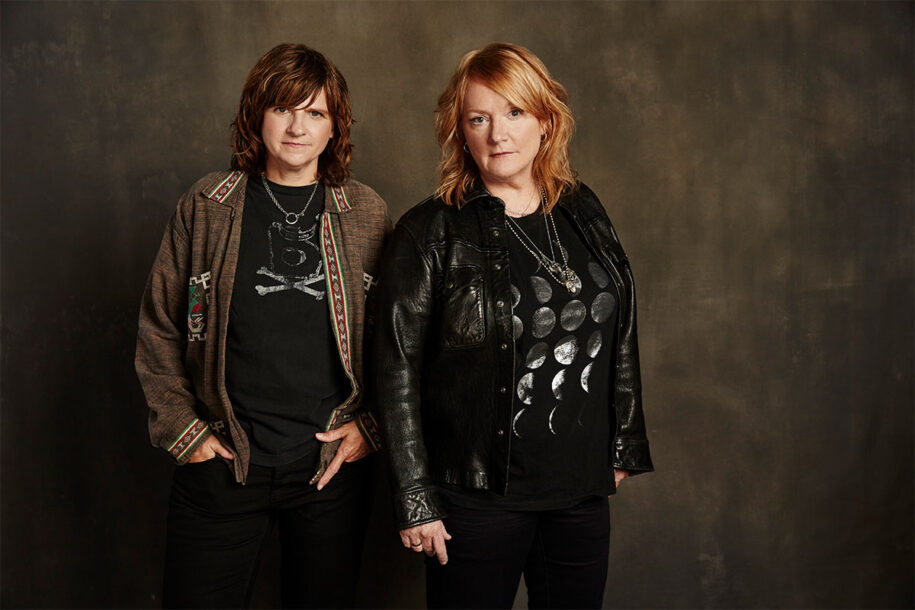
About the Indigo Girls:
Across four decades, 16 studio albums, and over 15 million records sold, Indigo Girls continue to blaze the trail for generations of Queer artists in the mainstream. The Grammy-winning duo of Emily Saliers and Amy Ray began their career in clubs and bars around their native Atlanta, GA amidst a blossoming alternative music scene before signing to Epic Records in 1988. Indigo Girls’ eponymous major label debut sold over two million copies under the power of singles “Closer to Fine” and “Kid Fears” and introduced the duo’s signature harmonies and powerful, sophisticated songs to a dedicated, enduring global audience. Indigo Girls was the first of six consecutive Gold and/or Platinum-certified albums. Their latest record, Look Long, is a stirring and eclectic collection of songs that finds the duo reunited in the studio with their strongest backing band to date. “We joke about being old, but what is old when it comes to music? We’re still a bar band at heart,” says Saliers. “While our lyrics and writing approach may change, our passion for music feels the same as it did when we were 25 years old.”
Committed and uncompromising activists, Saliers and Ray work on issues like racial justice and reproductive rights (Project Say Something), immigration reform (El Refugio), LGBTQ advocacy, education (Imagination Library), death penalty reform, and Native American rights (First Peoples Fund).
“As time has gone on, our audience has become more expansive and diverse, giving me a sense of joy,” says Saliers. Recently, “Closer to Fine” featured prominently in Greta Gerwig’s blockbuster film Barbie and introduced Indigo Girls’ music to a new generation of listeners. Released in 2024, their critically-acclaimed documentary Indigo Girls: It’s Only Life After All (directed by Alexandria Bombach) blends 40 years of home movies, raw film archive, and intimate present-day verité into a heartfelt career retrospective. A New York Times Critic’s Pick, the documentary premiered opening night at the Sundance Film Festival in 2023 and went on to screen at SXSW, Tribeca Film Festival, and Hot Docs before releasing to Netflix.
While Rolling Stone describes them as “ideal duet partners,” Indigo Girls’ live performances aren’t so much duets as they are community experiences—massive group singalongs together with their audience. To hear those collective voices raise into one, singing along and overpowering the band itself, one realizes the importance Indigo Girls’ music has in this moment. In our often-terrifying present, we are all in search of a daily refuge, a stolen hour or two, to engage with something that brings us joy, perspective, or maybe just calm. As one bar band once put it, “We go to the doctor, we go to the mountains…we go to the Bible, we go through the work out.” For millions, they go to the Indigo Girls: a creative partnership certain of its bearings, forging a way forward.
About Brian Dunne:
If you’re a romantic, an artist, or an otherwise sentient being looking for a reason to believe, consider Clams Casino your wake up call. The fourth solo album from New York songwriter Brian Dunne is a burst of energy, a colossal leap forward, and a prolonged moment of direct eye-contact from one of this generation’s sharpest observers of young American life. Self-produced at Dunne’s home in Red Hook, Brooklyn, Clams Casino was inspired by the classic songwriting form of working-class blues and placed in an unmistakably modern context. “Is it so bad to want a good life?” he asks in the opening title track, and these bracing, hook-filled songs navigate our ongoing negotiations through disappointment and rejection, loss and isolation, and ultimately, hard-earned self-determination.
Following his acclaimed 2023 solo album Loser on the Ropes, released on Kill Rock Stars, and two word-of-mouth successes from his cheeky supergroup Fantastic Cat, Dunne sought to craft a more cohesive statement, based on the some of the archetypes he’s observed throughout his life as a working musician and touring artist around the world. “Loser on the Ropes was about failure,” he reflects, “but there was a fight that was ongoing—which is inherently optimistic. You’re still in the ring.” Now his observations arrive once the final bell has rung and the crowd has wandered home: “The bad guys won. What are we going to do?”
To answer these questions, Dunne kept his focus tight. He worked with only a few collaborators—Dan Drohan on drums, Alex Wright on organ for the climactic ballad “Living It Backwards”—and constructed his narratives as if drafting a tight-knit screenplay. “I could just see the characters play out—who gets to leave and who gets to stay, who gets to keep living the dream and who has it downsized. I was thinking about how it all comes down to class.”
While the lyrics circle scenes of modern despair—stretches of days when the only texts come from food delivery services, childhood dreams chipping away like a sticker on a venue mirror—the music is the most uplifting and hard-hitting in Dunne’s catalog. Accompanying himself on nearly all instruments, he sought inspiration from an era of classic rock when artists tentatively embraced the new wave sound of the late-’70s, incorporating keyboards and synths without delving fully into the digital gloss of the CD era. The result can feel like if novelist Sam Lipsyte wrote the lyrics for Billy Joel’s Glass Houses, or if the Jason Isbell of Southeastern cut his teeth in scuzzy NYC rock clubs as opposed to Nashville bars.
You can imagine nearly every song as the peak of Dunne’s celebrated live set, packing in the singalong choruses and quotable lyrics from front-to-back. Take “Play the Hits,” the first song Dunne wrote for the record, with a punchy arrangement worthy of the Heartbreakers. In another songwriter’s hands, the subject matter—exploring themes of aging and self-destruction with alternating tones of bitter resentment, fatalist drama, and writhing self-inquiry—might come off as harsh. But Dunne approaches his characters with such empathy, detail, and humor that you can’t help but root for them—even when they barely have the strength to get through the day. “Play the hits, kid/Just like your dad did/Sometimes it’s time to go,” he sings in the chorus, injecting each word with enough warmth to make it feel like a pep talk.
Some of Dunne’s devotion comes from how personally he takes the subject matter. “I’ve never been at the center of alternative culture,” he admits, “but it’s always been very important to me. Every generation has its American dream, and it felt like the millennial American dream was a little more urban. Everybody seemed to have some sort of foot in the counterculture, whether they worked for Morgan Stanley or they played in a rock band. It felt like, as people got older, I started to see I was believing in something that was maybe a little bit of a facade.”
This balance between ascendant aspirations and crushing reality—particularly through the eyes of formal idealists leaving the big city—forms the thematic heart of the record. In “Rockland County” and “I Watched the Light,” we hear contrasting portraits of characters who make the decision to move back to their hometown: the former is confidently (and hilariously) relieved by their choice, while the other is haunted by the trail of dreams they left behind. Reflecting on the subject matter, Dunne laughs: “When you’re young and you see yourself as the little engine that could, you’re asking for a struggle. But there’s always an out: Have you ever considered the road more commonly traveled? In the end, maybe all that matters is that you keep moving.”
Even in conversation, it’s a classic Brian Dunne observation: funny, sad, compassionate, twisting idiomatic language until you’re left questioning received wisdom and, hopefully, trusting your instincts a little more. In this way, Clams Casino is the rare rock record that manages to inspire without ignoring the darkness dominating our purview, whose subject matter feels authentically universal yet allergic to cliche, whose characters are equally clever and open-hearted. Just look at the narrator of “Some Room Left,” a tender ballad whose landscape feels as stark and anxious as Dunne has ever allowed into his songwriting. And yet, he observes, “the fittest of the cynics can be disarmed/By a kindly stranger asking how you are.” It sounds like he’s speaking from experience—on both sides of the conversation—and he’s ready to let in the world.


